Oral & Maxillofacial Surgery

Head & Neck Oncosurgery

Surgical treatment for cancers of the mouth, jaw, tongue, and neck — with microvascular reconstruction to restore form and function after cancer resection.

Overview

What Is Head & Neck Oncosurgery?


Head and neck oncosurgery encompasses the surgical management of malignant tumours arising from the oral cavity, oropharynx, jaw bones, tongue, salivary glands, and cervical lymph nodes. In India, oral cavity cancers driven by tobacco and areca nut use constitute a significant proportion of all cancers, making this a critically important surgical specialty.

The primary goal of oncosurgery is complete tumour removal with negative surgical margins — ensuring no cancer cells are left behind — while simultaneously planning reconstruction to restore the patient's appearance, speech, and swallowing ability. This dual mandate of oncological clearance and functional reconstruction distinguishes head and neck oncosurgery from general cancer surgery.

Dr. Abhisek Chatterjee performs head and neck oncosurgery at Asha Cancer Institute and Asha Nursing Home, Rampurhat — bringing specialist cancer surgical care to patients in Birbhum and surrounding districts, reducing the need to travel to Kolkata or other major centres for treatment.

Asha Cancer Institute, Rampurhat
Resection + Reconstruction in same setting
Cancers Treated

Types of Cancer Treated

Dr. Chatterjee treats the full spectrum of oral cavity, jaw, and neck cancers — from early resectable tumours to complex cases requiring reconstruction.

Oral Cancer

Buccal Mucosa, Gingiva, Palate

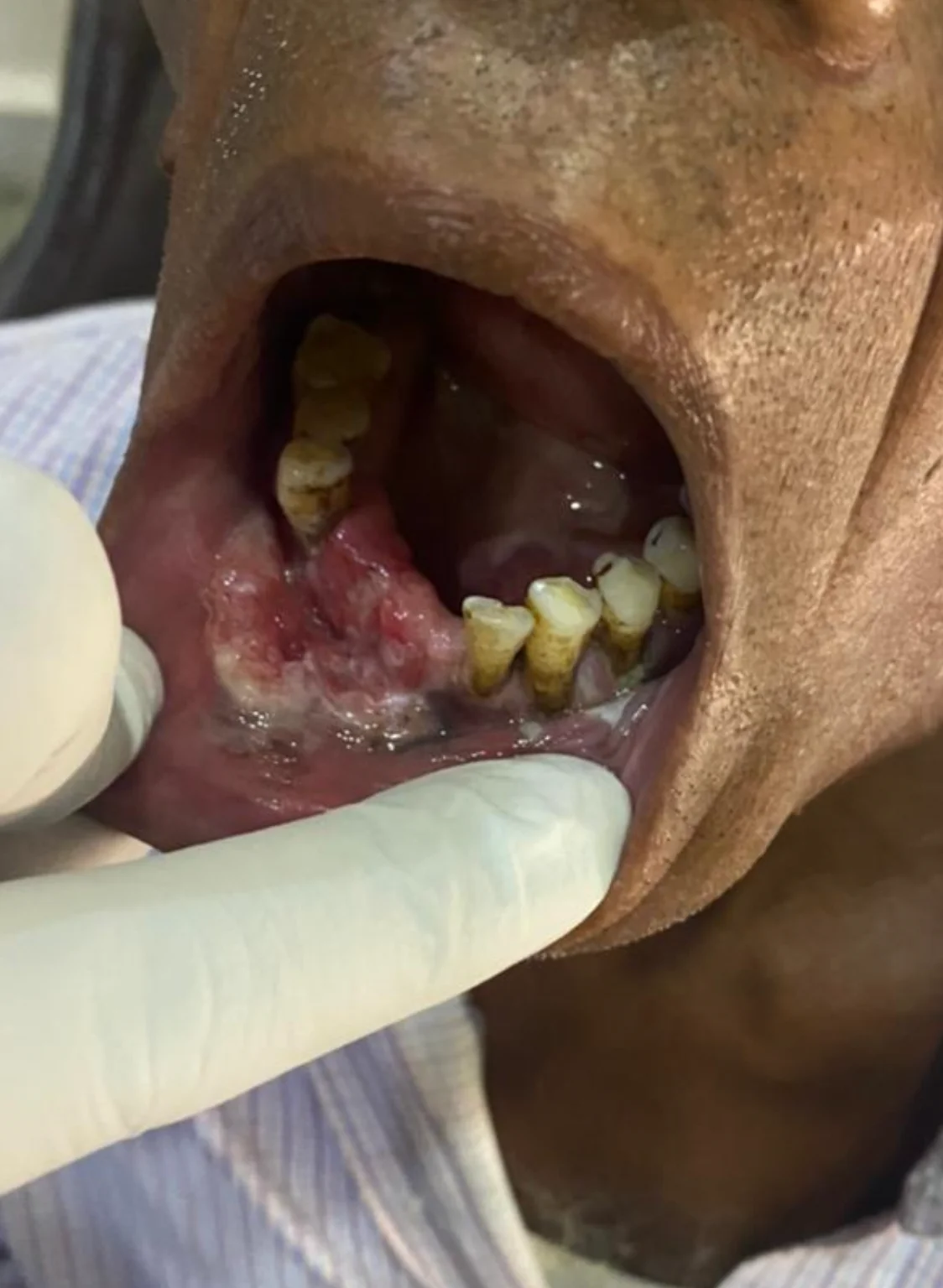
Cancer arising from the inner cheek lining (buccal mucosa), gum (gingiva), hard palate, floor of mouth, and lip. Surgical treatment involves wide local excision with adequate margins, often combined with marginal or segmental mandibulectomy when bone is involved. Neck dissection is performed when nodal disease is present or prophylactically in high-risk cases.
Tongue Cancer

Partial & Total Glossectomy

Squamous cell carcinoma of the lateral border or undersurface of the tongue is among the most common oral cancers in India. Treatment is partial or total glossectomy depending on tumour extent, with simultaneous free flap reconstruction (anterolateral thigh or radial forearm flap) to restore speech and swallowing function.

Jaw Cancer

Mandible & Maxilla Tumours

Primary tumours of the jaw bones include ameloblastoma, odontogenic tumours, and osteosarcoma, alongside squamous cell carcinoma invading bone. Treatment ranges from marginal to segmental resection of the mandible or maxilla, with reconstruction using free fibula osteocutaneous flap to restore jaw continuity and facial form.

Neck Disease

Lymph Nodes & Neck Dissection

Head and neck cancers spread predictably to the cervical lymph nodes. Neck dissection — surgical removal of lymph node-bearing tissue in the neck — is performed therapeutically when nodal disease is confirmed, or electively when the risk of occult nodal metastasis is significant. Selective, modified radical, and radical neck dissection are performed based on disease extent.

Reconstructive Surgery

Microvascular Reconstruction

Reconstruction is planned and performed simultaneously with cancer resection — restoring the patient's jaw, tongue, and oral lining using microsurgical free tissue transfer.

Why Reconstruction Matters

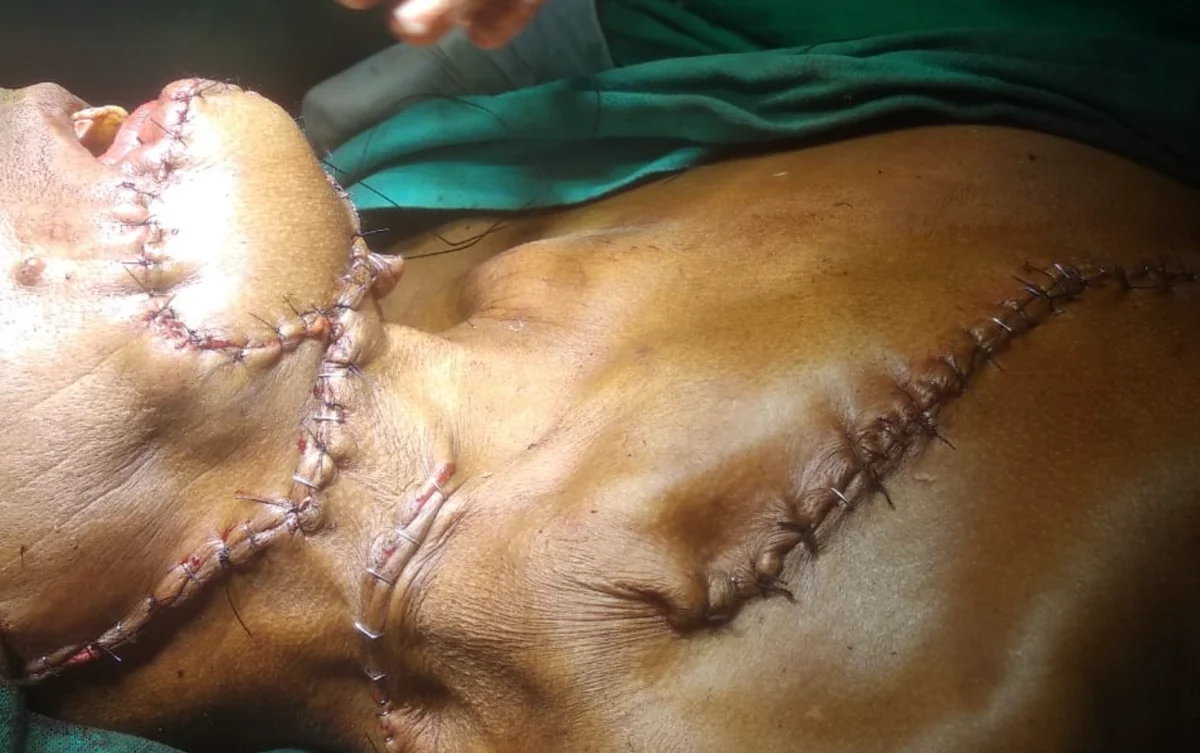
Removing a jaw, tongue, or oral cavity tumour creates a significant defect that affects eating, speaking, breathing, and appearance. Without reconstruction, patients face severe functional disability. Modern free flap microsurgery allows these defects to be reliably closed with well-vascularised tissue, enabling patients to return to meaningful function after cancer surgery.

Free Fibula Flap

The gold standard for jaw (mandible) reconstruction. A segment of the fibula bone from the leg, along with its overlying skin paddle and blood vessels, is transferred to reconstruct the resected jaw. Microsurgical anastomosis connects the donor blood vessels to neck vessels. The fibula provides excellent bone stock and can be shaped to recreate jaw contour, and later supports dental implants for tooth restoration.

Anterolateral Thigh (ALT) Flap

A versatile fasciocutaneous or musculocutaneous flap harvested from the thigh, based on the descending branch of the lateral circumflex femoral artery. The ALT flap is used to reconstruct large soft tissue defects of the tongue, floor of mouth, buccal mucosa, and oropharynx. It provides a large, pliable skin paddle with minimal donor site morbidity and can be thinned for intraoral use.

Radial Forearm Flap

A thin, pliable fasciocutaneous flap from the forearm based on the radial artery. Ideal for intraoral reconstructions requiring thin, supple tissue — particularly floor of mouth, soft palate, and partial glossectomy defects. The thinness of the flap allows it to conform to the oral cavity contours without bulk. Can also be harvested as an osteocutaneous flap including a segment of radius bone for small jaw defects.

Surgical Approach

Our Surgical Approach

From diagnosis to reconstruction, each step is planned with oncological safety and functional outcome as equal priorities.

Biopsy & Histopathological Confirmation

All suspicious lesions undergo incisional biopsy under local anaesthesia. Histopathology confirms the tumour type, grade, and nature (squamous cell carcinoma, adenocarcinoma, sarcoma, etc.) before any resection is planned.

Staging & Imaging

CT scan and MRI of the head and neck assess tumour size, depth of invasion, bone involvement, and lymph node status. PET-CT is used for advanced or recurrent cases to screen for distant metastasis. OPG assesses jaw bone involvement.

Multidisciplinary Planning

Treatment planning involves discussion with medical oncology and radiation oncology to determine whether surgery alone or multimodal treatment (surgery + radiotherapy ± chemotherapy) is appropriate for the patient's stage and general health.

Tumour Resection with Clear Margins

The primary tumour is excised surgically with a margin of normal tissue around it (oncological clearance). Intraoperative frozen section examination confirms adequate margins. Simultaneous neck dissection is performed when indicated.

Immediate Reconstruction

Reconstruction is planned and executed at the same operative sitting as the tumour resection. Free microvascular flaps, regional pedicled flaps, or local flaps are used to close the defect and restore form and function. Microsurgical anastomosis is performed for free flap transfer.

Adjuvant Treatment & Surveillance

Postoperative histopathology confirms margin status and lymph node involvement, guiding decisions about adjuvant radiotherapy or chemoradiotherapy. Regular long-term follow-up monitors for local recurrence, regional disease, and second primary cancers.

Why Specialist Care

Why Specialist Oncosurgical Care Matters


Head and neck cancer surgery is technically demanding and requires a surgeon with specific training in both tumour extirpation and reconstructive microsurgery. Inadequate margin clearance at primary surgery significantly worsens prognosis and makes salvage treatment more difficult.

Equally important is the simultaneous management of reconstruction. A surgeon who can perform both the oncological resection and the free flap reconstruction in a single operative setting reduces operative time, anaesthetic risk, and the need to involve multiple surgeons. This integrated approach is the standard of care at major cancer centres.

  • Oncological clearance with intraoperative frozen section margin control
  • Simultaneous resection and microvascular reconstruction in one procedure
  • Neck dissection performed concurrently — no second surgery required
  • Post-surgical planning for adjuvant radiotherapy or chemoradiotherapy
  • Long-term oncological surveillance and recurrence monitoring
Local Access

Head & Neck Cancer Surgery in Rampurhat


Head and neck cancer surgery with microvascular reconstruction has traditionally been available only at major cancer centres in Kolkata, making treatment inaccessible to many patients in rural West Bengal. Delays in accessing specialist care are associated with disease progression and poorer outcomes.

Dr. Abhisek Chatterjee performs specialist head and neck oncosurgery at Asha Cancer Institute, Rampurhat — providing diagnosis, surgical resection, reconstruction, and post-surgical oncological coordination for patients from Birbhum, Murshidabad, and surrounding districts without the need to travel to Kolkata for primary surgical management.

RampurhatBirbhumMurshidabadBolpurNalhatiSuriDumkaDeoghar

Book a Cancer Surgery Consultation

For oral cancer evaluation, biopsy, or surgical consultation, contact Dr. Chatterjee at Asha Cancer Institute, Rampurhat:

Asha Cancer Institute & Asha Nursing Home, Rampurhat, Birbhum, West Bengal

Common Questions

Head & Neck Oncosurgery FAQs

Facing a Head or Neck Cancer Diagnosis?

Early surgical evaluation improves outcomes. Contact Dr. Abhisek Chatterjee at Asha Cancer Institute, Rampurhat for specialist oncosurgical consultation in Birbhum.