Oral & Maxillofacial Surgery

Jaw Tumor Surgery

Expert diagnosis and surgical treatment of jaw cysts, odontogenic tumours, and jaw bone lesions — from enucleation to resection and reconstruction.

Overview

What Are Jaw Tumors & Cysts?


Jaw tumours and cysts are abnormal growths arising from the jaw bones (mandible and maxilla) or from the epithelial cells associated with tooth development. They range from simple fluid-filled cysts to complex benign tumours with locally aggressive behaviour. While the majority are benign, this does not mean they are harmless — many expand through bone, displace or resorb teeth, and cause significant structural damage if left untreated.

Most jaw lesions present as painless swelling of the jaw detected either on routine dental X-ray or when the swelling becomes noticeable. Larger lesions may cause facial asymmetry, tooth mobility, numbness of the lip, or difficulty opening the mouth. Unlike many medical conditions, jaw cysts and tumours do not resolve on their own — they require surgical removal.

Dr. Abhisek Chatterjee performs the full range of jaw tumour surgeries at Asha Cancer Institute and Asha Nursing Home, Rampurhat — providing specialist surgical care for patients from Birbhum and surrounding districts.

Asha Nursing Home & Cancer Institute, Rampurhat
Histopathology-guided surgical planning
Conditions Treated

Types of Jaw Tumors & Cysts Treated

Dr. Chatterjee treats the full spectrum of jaw cysts, odontogenic tumours, and fibro-osseous lesions — with treatment tailored to each lesion's type, size, and recurrence risk.

Ameloblastoma

Locally Aggressive Benign Jaw Tumor

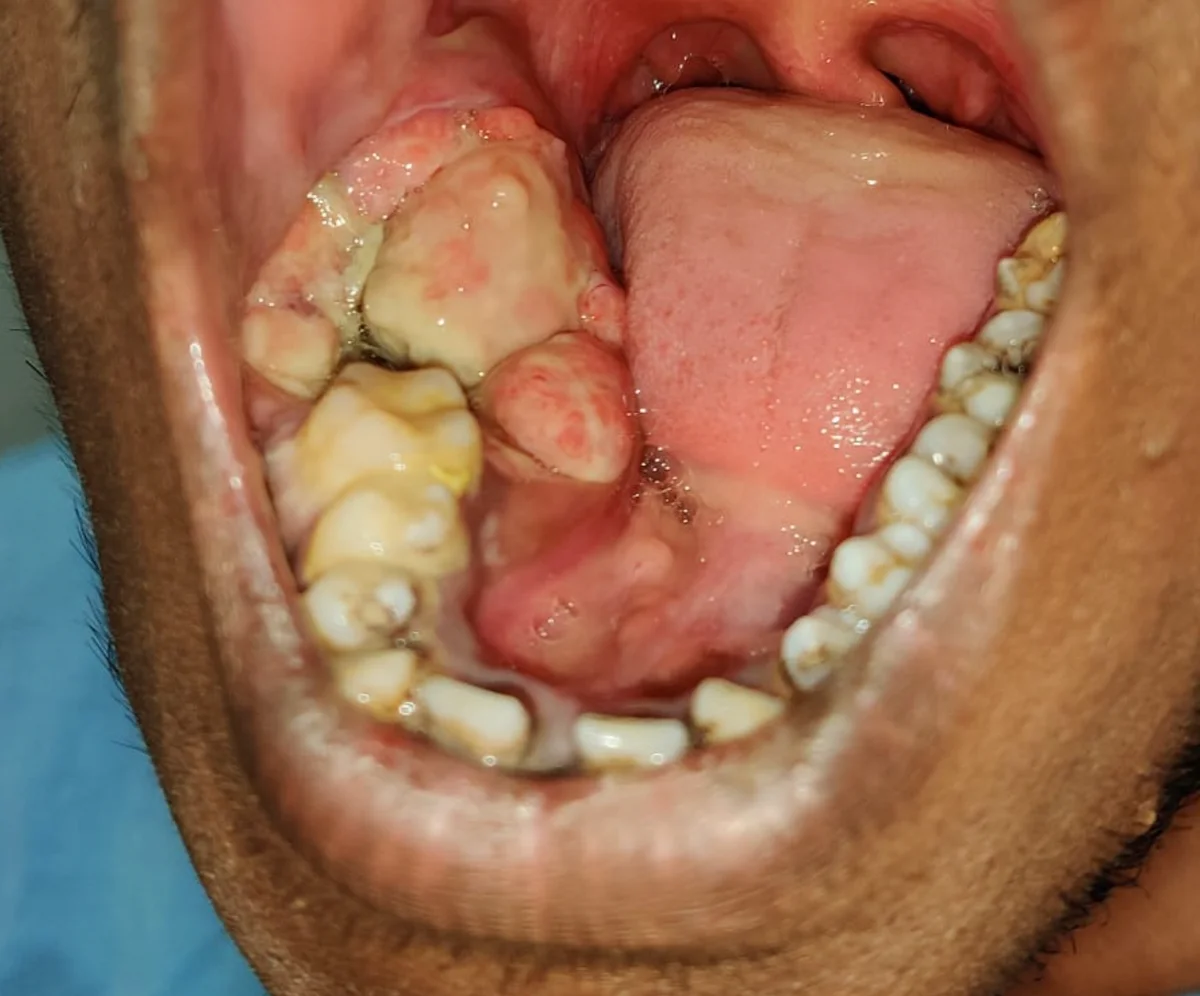
Ameloblastoma is the most clinically significant benign odontogenic tumour of the jaw. Though benign, it is locally aggressive — expanding through bone, destroying adjacent structures, and carrying a high recurrence rate if not adequately removed. It most commonly occurs in the posterior mandible of adults. Treatment requires wide surgical resection with adequate margins; simple curettage is associated with unacceptably high recurrence rates. Jaw reconstruction with bone grafting or free fibula flap may be required after resection.
Dentigerous Cyst

Fluid-Filled Cyst Around Unerupted Tooth

A dentigerous (follicular) cyst develops around the crown of an unerupted or impacted tooth — most commonly the mandibular third molar or maxillary canine. It arises from the reduced enamel epithelium of the tooth follicle and expands slowly, resorbing adjacent bone. Small cysts may be managed by enucleation with removal of the associated tooth. Large cysts may require marsupialisation (decompression) prior to definitive enucleation to reduce the cyst volume before surgery.

Odontogenic Keratocyst (OKC)

High Recurrence Rate Aggressive Cyst

The odontogenic keratocyst (OKC) — now also classified as a keratocystic odontogenic tumour — is characterised by a thin, friable epithelial lining and daughter satellite cysts within the cyst wall, which account for its notoriously high recurrence rate after simple enucleation. OKCs occur most commonly in the posterior mandible and ramus. Treatment includes thorough enucleation with peripheral ostectomy, application of Carnoy's solution to the cyst lining, and long-term radiological follow-up to detect recurrence. Multiple OKCs may indicate Gorlin syndrome.

Jaw Bone Tumors

Fibrous Dysplasia, Ossifying Fibroma & Others

A spectrum of benign tumours and tumour-like lesions arises from the jaw bones themselves, distinct from odontogenic (tooth-related) lesions. These include fibrous dysplasia (replacement of normal bone by fibrous tissue), ossifying fibroma (well-defined fibro-osseous lesion with potential for continued growth), central giant cell granuloma (aggressive lesion causing bone expansion and root resorption), and osteoma. Treatment ranges from conservative surgical contouring to complete excision depending on the lesion type, size, and growth behaviour.

Surgical Treatment

Surgical Approaches

The surgical approach is selected based on the histological type, size, location, and recurrence risk of the jaw lesion — from minimally invasive enucleation to segmental resection with reconstruction.

Enucleation & Curettage

Removal of the cyst or tumour in its entirety with careful curettage of the bony cavity. Suitable for smaller, well-defined lesions with low recurrence potential. The bony defect is packed with bone graft material or allowed to heal naturally. Histopathological examination of the entire specimen confirms the diagnosis and guides follow-up.

Resection

For locally aggressive tumours such as ameloblastoma, wide segmental resection of the jaw with clear margins is required. This involves removing a segment of the mandible or maxilla along with an adequate margin of normal surrounding bone to minimise recurrence risk. Intraoperative frozen section may be used to confirm margin status. Resection may be marginal (preserving jaw continuity) or segmental (creating a gap that requires reconstruction).

Reconstruction

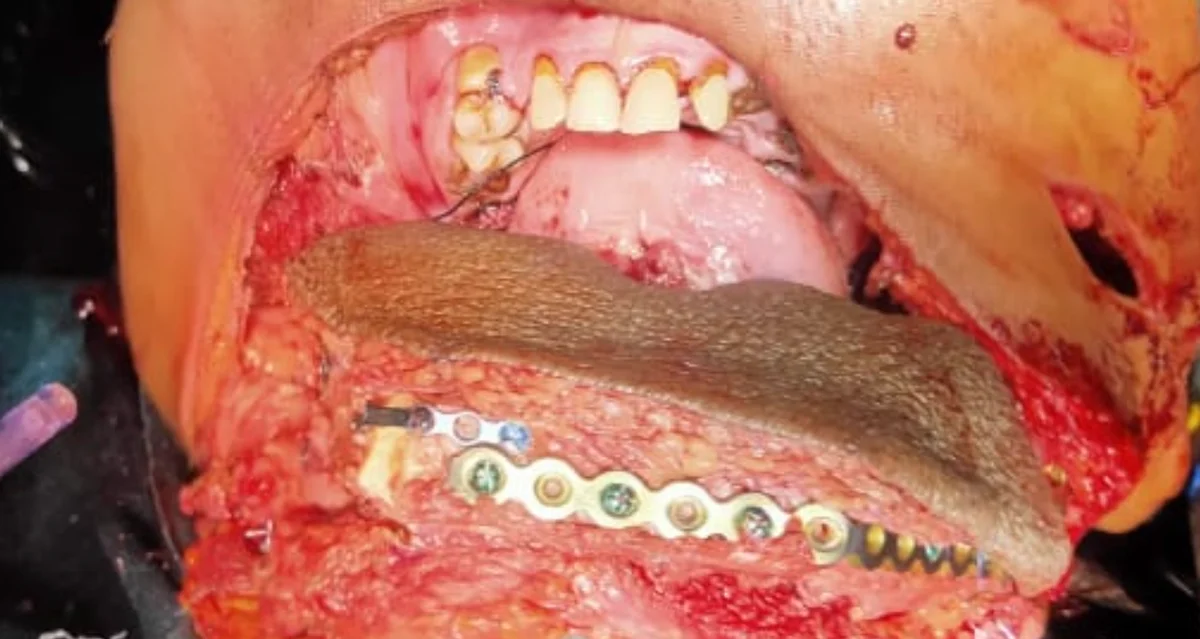
When segmental jaw resection creates a continuity defect, reconstruction is planned to restore jaw form and function. Options include autologous bone grafting (iliac crest or rib) for smaller defects and free fibula osteocutaneous flap for larger segmental defects. Reconstruction may be performed simultaneously with resection or as a staged procedure. Dental rehabilitation with implants may follow once the reconstructed jaw has healed and consolidated.

When Is Jaw Reconstruction Required?

Jaw reconstruction is planned when the extent of surgical resection creates a significant defect in the mandible or maxilla. Segmental mandibulectomy — removal of a section of the lower jaw — is necessary for aggressive tumours like ameloblastoma where inadequate removal risks recurrence. The resulting continuity defect requires reconstruction to restore jaw function, facial form, and the ability to chew and speak normally.

Bone Grafting

For smaller defects, autologous bone graft from the iliac crest (hip) or rib can be used to bridge the gap. This works well in young patients in a staged approach after initial tumour clearance is confirmed.

Free Fibula Flap

The free fibula osteocutaneous flap — a segment of the fibula bone from the leg with its blood supply — is the gold standard for large segmental jaw reconstruction. Microsurgery reconnects the blood vessels, allowing the bone to survive and integrate in the jaw. The fibula can later support dental implants.

Titanium Reconstruction Plates

In selected cases, immediate reconstruction with titanium locking reconstruction plates maintains jaw continuity while secondary bone grafting is planned at a later stage, particularly where patient fitness or tumour uncertainty makes immediate bone reconstruction less appropriate.

Aftercare

Recovery After Jaw Tumor Surgery


Minor Surgery (Enucleation / Curettage)

Typically performed under general anaesthesia as a day case or overnight admission. Soft diet for 2–3 weeks. Oral antibiotics and analgesics prescribed. Wound review at 1 week. Radiological follow-up at regular intervals (6 months, 1 year, then annually) to detect any recurrence — particularly important for OKC and ameloblastoma.

Major Resection Without Reconstruction

Hospital stay of 2–4 days. Soft or liquid diet for several weeks. Jaw exercises to maintain range of motion. Follow-up imaging to confirm clearance. Secondary bone grafting planned at 6–12 months once the area has fully healed and the histopathology confirms adequate margins.

Resection with Free Fibula Reconstruction

Hospital stay of 8–12 days. Nasogastric tube feeding initially, progressing to oral fluids then soft diet. Regular monitoring of the reconstructed tissue. Leg (donor site) pain and stiffness managed with physiotherapy. Full jaw function recovery over 3–6 months. Dental implants in the fibula bone can be placed once integration is confirmed — typically at 6–12 months post-surgery.

Long-Term Follow-Up

All jaw tumour patients require long-term radiological follow-up — typically OPG or CT at 6-monthly intervals initially, then annually. Recurrence may appear years after initial treatment, particularly for OKC and ameloblastoma. Any new swelling, pain, or tooth loosening in the operated area should be reported promptly for re-evaluation.

Why Choose Dr. Chatterjee

Specialist Jaw Tumor Surgeon in Birbhum


Jaw tumour surgery requires a surgeon with specialist training in oral and maxillofacial surgery — not only to perform the resection safely but to plan the appropriate extent of surgery based on the tumour type and recurrence risk, and to reconstruct the resulting defect effectively.

Dr. Abhisek Chatterjee holds an MDS in Oral & Maxillofacial Surgery and has dedicated training in the management of jaw cysts, odontogenic tumours, and fibro-osseous lesions, as well as reconstructive surgery including free flap microvascular reconstruction when required.

  • Full surgical spectrum: enucleation, resection, and reconstruction under one surgeon
  • Histopathology-guided treatment — biopsy confirms diagnosis before surgery
  • Microvascular free fibula reconstruction available for large jaw defects
  • Structured long-term follow-up to detect recurrence early
  • Academic appointment at Rampurhat Govt. Medical College & Hospital
Local Access

Jaw Tumor Surgery in Rampurhat, Birbhum


Specialist jaw tumour surgery has traditionally required patients in rural West Bengal to travel to Kolkata or other major centres, often delaying diagnosis and treatment. Dr. Abhisek Chatterjee provides the full range of jaw cyst and tumour surgery — from simple enucleation to complex resection with free flap reconstruction — at Asha Cancer Institute and Asha Nursing Home, Rampurhat.

Patients from Birbhum, Murshidabad, Bolpur, Suri, Nalhati, Dumka, Deoghar, and surrounding areas can access specialist maxillofacial surgical care locally, without the burden of travel to distant centres for what is often a condition requiring multiple consultations and staged treatment.

RampurhatBirbhumMurshidabadBolpurNalhatiSuriDumkaDeoghar

Book a Jaw Tumor Consultation

For jaw swelling evaluation, biopsy, or jaw tumor surgery consultation, contact Dr. Chatterjee:

Asha Cancer Institute & Asha Nursing Home, Rampurhat, Birbhum, West Bengal

Common Questions

Jaw Tumor Surgery FAQs

Jaw Swelling? Get an Expert Evaluation

Painless jaw swelling, loosening teeth, or a cyst found on X-ray — all warrant specialist assessment. Contact Dr. Abhisek Chatterjee at Asha Cancer Institute, Rampurhat for jaw tumor evaluation and treatment.