Oral & Maxillofacial Surgery

TMJ Surgery & Total Joint Replacement

Specialist surgical treatment for jaw joint disorders — from jaw locking and TMJ ankylosis to degenerative joint disease and total TMJ joint replacement.

Overview

What Is the TMJ & Why Does It Need Surgery?


The temporomandibular joint (TMJ) is the joint connecting the lower jaw (mandible) to the skull, located just in front of the ear on each side. It is one of the most complex joints in the body — allowing both hinge-type and sliding movements to enable opening, closing, chewing, and speaking.

TMJ disorders (TMDs) encompass a range of conditions affecting the joint itself, the disc within the joint, the surrounding muscles, or a combination of these. Many TMJ disorders respond to conservative management with splints, physiotherapy, and medications. However, when structural problems — such as bony ankylosis, severe disc derangement, or degenerative joint collapse — are present, surgery may be the only effective treatment.

Dr. Abhisek Chatterjee has specialist training in the surgical management of TMJ disorders, from minimally invasive arthrocentesis to total joint replacement — offering the full range of TMJ surgical options in Rampurhat, Birbhum.
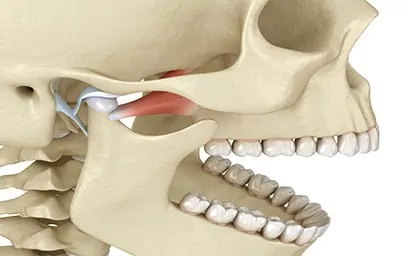
Bilateral Joint on each side of the jaw
Specialist Maxillofacial surgeon expertise
Conditions Treated

TMJ Conditions We Treat

Dr. Chatterjee treats the full spectrum of temporomandibular joint disorders requiring surgical intervention.

TMJ Ankylosis

Bony or fibrous fusion of the temporomandibular joint, resulting in severe restriction or complete loss of jaw opening. Often a consequence of childhood trauma, infection, or prolonged joint inflammation. Surgical release (condylectomy/gap arthroplasty) with reconstruction is required to restore jaw movement.

Internal Derangement

Displacement of the articular disc (the cartilage pad within the TMJ) from its normal position. Causes clicking, popping, catching, or locking of the jaw. Ranges from disc displacement with reduction (clicking) to without reduction (locked jaw). Surgical management includes arthrocentesis, arthroscopy, or open disc repositioning.

Degenerative Joint Disease

Osteoarthritis of the TMJ causing progressive cartilage loss, joint space narrowing, bone erosion, and condylar resorption. Results in pain, crepitus (grinding noise), progressive bite change, and facial shortening. Management ranges from conservative treatment to surgical condyloplasty or total joint replacement.

Condylar Fractures

Fractures of the mandibular condyle (the rounded head of the lower jaw that forms the TMJ) resulting from facial trauma. Depending on displacement and clinical presentation, management may include conservative physiotherapy or surgical open reduction and internal fixation to restore normal joint anatomy and prevent long-term complications.

Surgical Options

TMJ Surgical Procedures Offered

Treatment is tailored to the patient's specific condition, severity, and prior treatment history — from minimally invasive joint lavage to total joint replacement.

Arthrocentesis

A minimally invasive outpatient procedure performed under local anaesthesia. Two needles are inserted into the joint space to irrigate and lavage the TMJ, washing out inflammatory mediators, debris, and adhesions. Effective for acute disc displacement with pain and limited opening. Quick recovery with minimal risk.

Open Joint Surgery

Surgical access to the TMJ through a pre-auricular incision (in front of the ear). Allows direct visualisation and manipulation of the joint disc, removal of adhesions, disc repositioning and suturing (disc plication), or discectomy when the disc is irreparably damaged. Suitable for internal derangement not responding to conservative measures.

Condylectomy

Surgical removal of part or all of the mandibular condyle. Performed for TMJ ankylosis (to release the bony fusion and restore jaw opening), condylar tumours, or severely damaged condyles. In ankylosis surgery, condylectomy is combined with gap arthroplasty or joint reconstruction to prevent re-ankylosis.

Total TMJ Joint Replacement

Replacement of the entire TMJ (both the condyle and the glenoid fossa/socket) with a custom-fitted or stock prosthetic implant. Used for end-stage TMJ disease, failed previous joint surgeries, severe degenerative disease, or reconstructive needs after condylectomy. Provides a durable, functioning joint.

Total TMJ Joint Replacement

Total TMJ joint replacement is the definitive treatment for patients with end-stage temporomandibular joint disease. It replaces both articulating surfaces of the joint — the condyle (lower component) and glenoid fossa (upper component, the socket in the skull) — with biocompatible prosthetic implants.

When is total TMJ replacement indicated?
  • End-stage degenerative joint disease (TMJ osteoarthritis) with severe joint destruction
  • Failed previous TMJ surgeries requiring revisional joint reconstruction
  • Bilateral condylar resorption causing significant bite change and facial deformity
  • TMJ ankylosis in adults where alloplastic replacement is preferable to autologous grafts
  • Post-tumour resection of the condyle requiring functional joint reconstruction
What is involved?

The procedure is performed under general anaesthesia through a pre-auricular (in front of the ear) approach. The diseased condyle and glenoid fossa are removed and replaced with the prosthetic components. Implants may be stock (standard sizes) or custom-fabricated from the patient's CT scan using computer-aided design and manufacturing (CAD/CAM). Hospital stay is typically 2–3 days, with physiotherapy commencing shortly after.

Aftercare

Recovery & Rehabilitation


Immediately Post-Op

Hospital stay of 2–3 days. Swelling and stiffness around the jaw and pre-auricular area. Liquid diet. Pain managed with prescribed medications. Facial nerve function is monitored (transient weakness is rare but possible with pre-auricular incisions).

Weeks 1–4

Swelling gradually reduces. Soft/liquid diet maintained. Jaw physiotherapy exercises begun to improve mouth opening range. Regular follow-up with drain removal and wound inspection. Return to light desk activities typically possible.

Weeks 4–12

Progressive return to normal diet as healing advances. Ongoing physiotherapy to maximise jaw opening range. For ankylosis cases, aggressive physiotherapy is critical to prevent recurrence. Most patients experience significant improvement in jaw function by 8–12 weeks.

Long-Term

Regular follow-up at 6 months and annually thereafter. For total joint replacement, prosthesis longevity is monitored with imaging. Secondary dental rehabilitation (orthodontics, implants) may be planned once joint function is stable. Most patients achieve meaningful functional improvement.

Why Choose Us

Why Choose Dr. Abhisek Chatterjee for TMJ Surgery?

MDS Specialist with TMJ Surgical Training

Postgraduate surgical training in oral and maxillofacial surgery specifically includes TMJ surgery, arthroplasty, and joint reconstruction — unlike general orthopaedic or ENT surgeons.

Full Spectrum of TMJ Procedures

From minimally invasive arthrocentesis to open joint surgery and total TMJ replacement — all options are available under one surgeon, without referral to multiple specialists.

Specialist Care in Birbhum

TMJ surgical expertise available locally in Rampurhat — patients from Birbhum, Murshidabad, and surrounding districts do not need to travel to Kolkata for specialist joint surgery.

Structured Rehabilitation Programme

Surgery is only part of the journey — a structured postoperative physiotherapy and jaw exercise programme is coordinated to maximise functional recovery after TMJ surgery.

Local Access

TMJ Surgery in Rampurhat, Birbhum


TMJ surgery, particularly total joint replacement and ankylosis surgery, has historically required travel to major teaching hospitals or private centres in Kolkata. Dr. Abhisek Chatterjee brings specialist TMJ surgical care to Rampurhat, providing accessible treatment for patients in Birbhum and neighbouring districts.

RampurhatBirbhumMurshidabadBolpurNalhatiSuriDumkaDeoghar

Book a TMJ Surgery Consultation

For jaw locking, TMJ pain, or specialist joint surgery consultation:

Asha Nursing Home, Rampurhat, Birbhum, West Bengal

Common Questions

TMJ Surgery FAQs

Suffering from Jaw Locking or TMJ Pain?

Get specialist evaluation for your jaw joint problem. Dr. Abhisek Chatterjee offers the full range of TMJ surgical treatments in Rampurhat, Birbhum.